
About
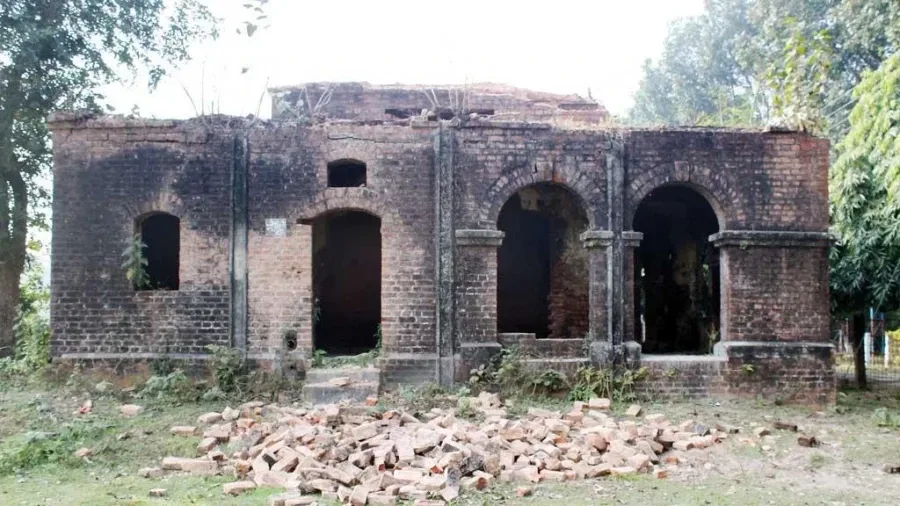
During the British colonial era, indigo was cultivated extensively in this district. To facilitate this, the British constructed *nilkuthi* (indigo factories/outposts). Remnants of these *nilkuthi* can still be found in various locations across the district; they served as hubs for the indigo planters—agents of the British colonial government—to oversee the cultivation of the crop.
Following the Industrial Revolution in England in 1760, there arose a high demand for indigo to dye textiles produced in factories. As the Indian subcontinent was then under British rule, the colonial authorities coerced the farmers of East Bengal into cultivating indigo. The cultivation followed a sharecropping system, where local farmers would lease land to grow the crop. However, after accounting for the demands of the indigo planters and landowners, as well as the costs of cultivation, the farmers were left with nothing but despair. Consequently, they began to refuse to grow indigo—an act of defiance that invited humiliation and brutal persecution. Farmers’ wives and children were often abducted and subjected to torture. This building serves as a poignant reminder of many such harrowing events.
The site was once known as "Lotkhana." It is said that recalcitrant farmers were brought to this indigo farm and punished by being hung—hence the name "Lotkhana" (derived from *lotkano*, meaning "to hang"). Over time, the term "Lotkhana" evolved into "Notkhana," which eventually gave rise to the name "Nilphamari." It is believed that, due to the local dialect, the term "Nil Khamar" (indigo farm) transformed into "Nil Khamari," which later evolved into "Nilphamari." Another theory suggests that "Nilphamari" may have originated from a corruption of the term "Indigo Farmer" (or "Nil Farmer"). Regardless of the various debates, there is no doubt that the name "Nilphamari" is rooted in the history of indigo cultivation.
Meanwhile, the *nilkuthi* located in front of the Nilphamari DC Garden has been used as the Nilphamari Officers' Club since 1999. Built in a colonial architectural style, this tin-roofed structure—measuring 63 by 51 feet—features two pantries, two bedrooms, a drawing room, two bathrooms, and a veranda at the rear. Times have changed, and with them, the lifestyles of those who have inhabited this building.
From 1882, the structure served as the residence of the Sub-divisional Administrator, and between 1984 and 1988, it functioned as the residence of the Deputy Commissioner and District Magistrate. Currently, it is used as the Nilphamari Officers' Club. Remarkably, this nearly 150-year-old building remains intact, having undergone no structural alterations whatsoever.
Address
Adjacent to the Deputy Commissioner's Office, Nilphamari
Gallery